Our lab members presented at the 2026 ISLS Annual Meeting 🔗
July 15, 2026
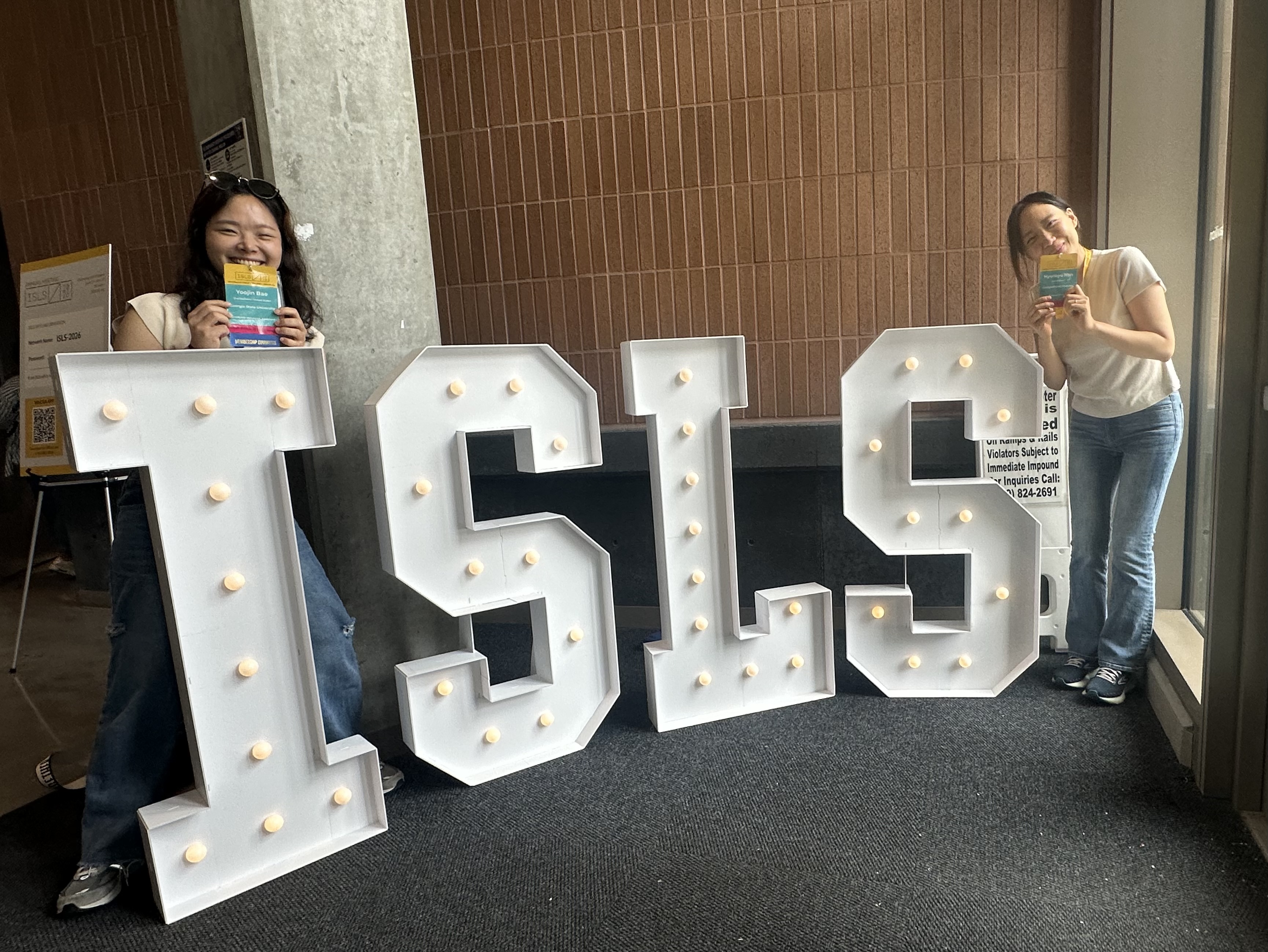
Our graduate research associates, Hyunkyu Han, Jinho Kim, Seora Kim, and Yoojin Bae, attended and presented at the 2026 International Society of the Learning Sciences (ISLS) Annual Meeting, held in Irvine, California, USA, from June 15–19. They presented one short paper and two posters in both in-person and virtual formats. In addition, our alumni and senior students—Lia Haddadian, Jinho, and Yoojin—served on the board of the International Learning Sciences Student Association (ILSSA). Jinho also participated as a presenter in a hybrid symposium.
In addition, Yoojin Bae was selected to participate in the Alt-Academia Career Workshop, held as part of the 2026 ISLS Annual Meeting. This selective professional development workshop, supported by the Wallace Foundation, helps learning scientists explore career pathways beyond traditional tenure-track positions.
References
Bae, Y., Kim, J., & Kim, M. K. (2026). Four years of AI-powered formative assessment: Exploring the 2-sigma effect and fairness. In B. K. Litts, D. DeLiema, C. Lee, S. Krist, A. Mawasi, L. Martin, & K. Kumpulainen (Eds.), Proceedings of the 20th International Conference of the Learning Sciences – ICLS 2026 (pp. 1382–1386). International Society of the Learning Sciences.
Han, H., Kim, S., Abdeen, M. S., & Kim, M. K. (2026). AI-scaffolded summarization in STEM: How do students differ in writing and revision? In B. K. Litts, D. DeLiema, C. Lee, S. Krist, A. Mawasi, L. Martin, & K. Kumpulainen (Eds.), Proceedings of the 20th International Conference of the Learning Sciences – ICLS 2026 (pp. 2851–2853). International Society of the Learning Sciences.
Kim, S., Han, H., & Kim. M. (2026). Design principles for AI-supported chatbots to scaffold problem-based learning in undergraduate nursing education. In Proceedings of the 20th International Conference of the Learning Sciences – ICLS 2026 (pp. 3238–3240). International Society of the Learning Sciences.
Malcolm, B., Vickery, M., Louis-Strakes Lopez, J., Siciliano, L., Simon, S., Xing, G., Kim, J., Kim, C., Zhao, Y., Desai, A., Sol Gadong, E., Mabadeje, Y., Mhungu, B., Haddadian, G., Eloy, A., Soodhani, N., Prasad, R., & Bae., Y (2026). Fostering Educational Intimacy: ILSSA Intergenerational Partnerships for Purposeful Community Building. In Proceedings of the 20th International Conference of the Learning Sciences - ICLS 2026 (pp. 2424–2436). International Society of the Learning Sciences.
Dr. Kim delivered an invited talk at Inha University in Incheon, South Korea. 🔗
May 22, 2026
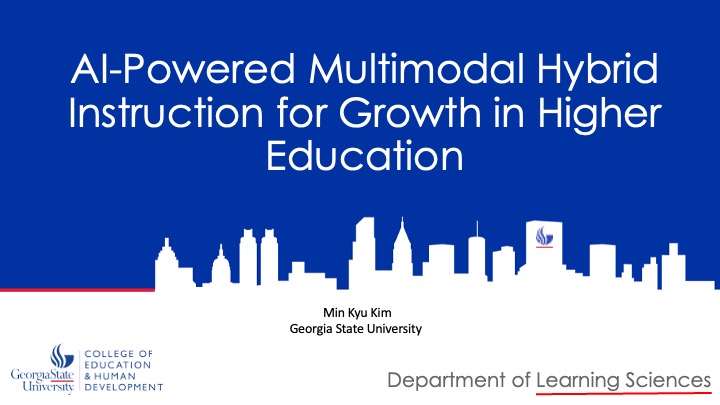
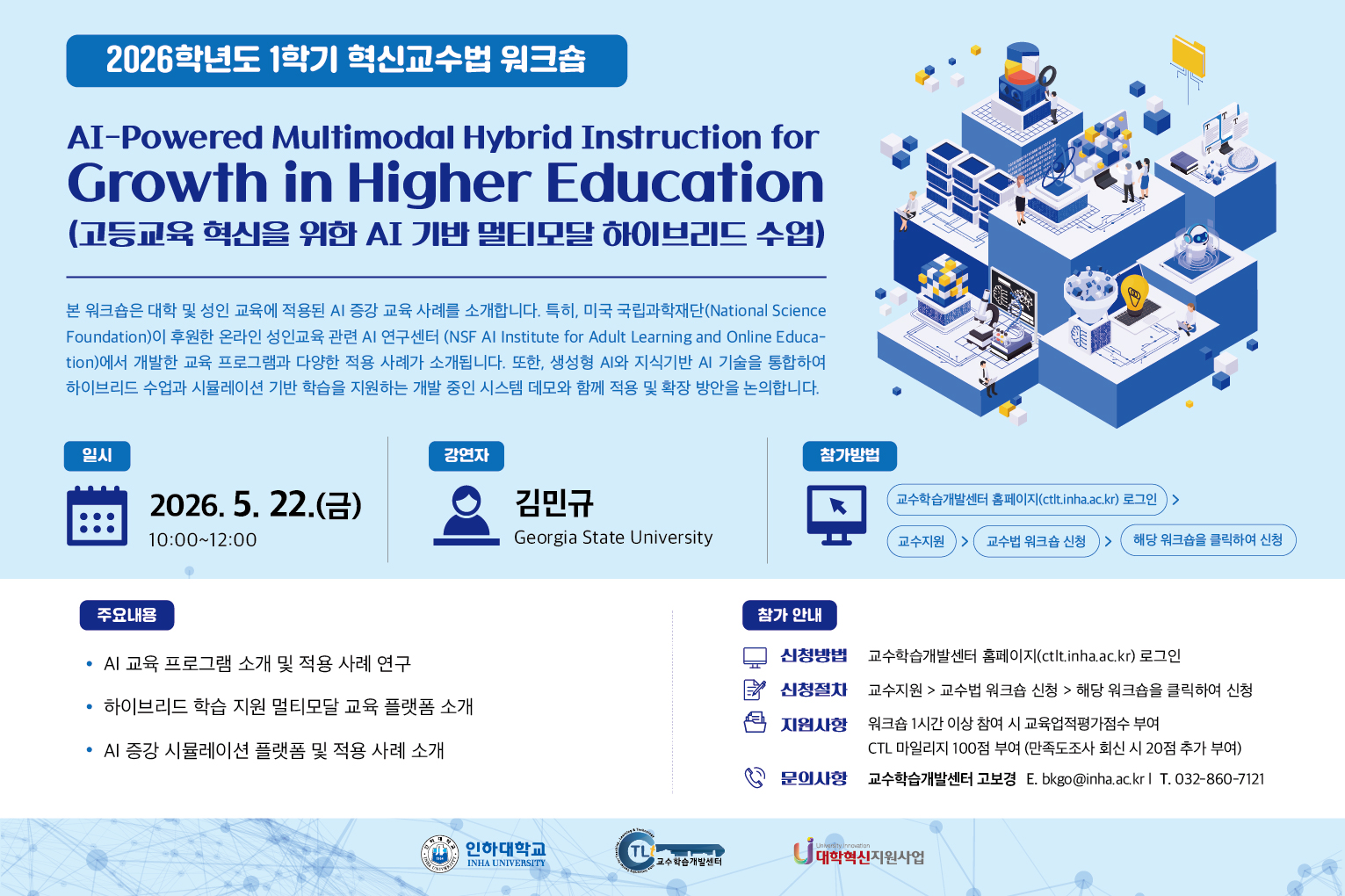
Dr. Kim was invited to a workshop series on instructional innovations offered by Inha University in Incheon, South Korea. The workshop was held via Zoom with over two hundred faculty and staff members from the university. This workshop introduced cases of AI-augmented instruction applied to higher education and adult learning. In particular, it presented educational programs and a range of application cases developed by the NSF AI Institute for Adult Learning and Online Education (AI-ALOE). The workshop also featured live demos of systems currently under development that integrate generative AI and knowledge-based AI to support hybrid instruction and simulation-based learning, along with a discussion of how these systems can be applied and scaled in real classrooms.
Key Topics
- Introduction to AI-powered educational programs and application case studies
- A multimodal instructional platform for supporting hybrid learning
- An AI-augmented simulation platform and its application cases
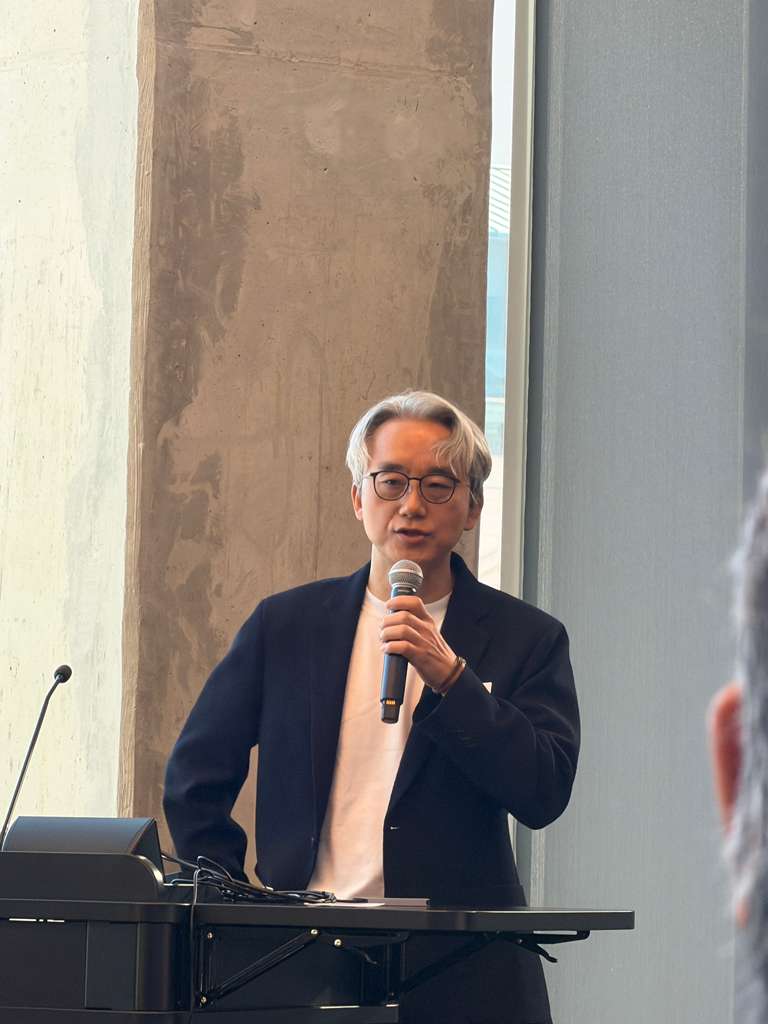
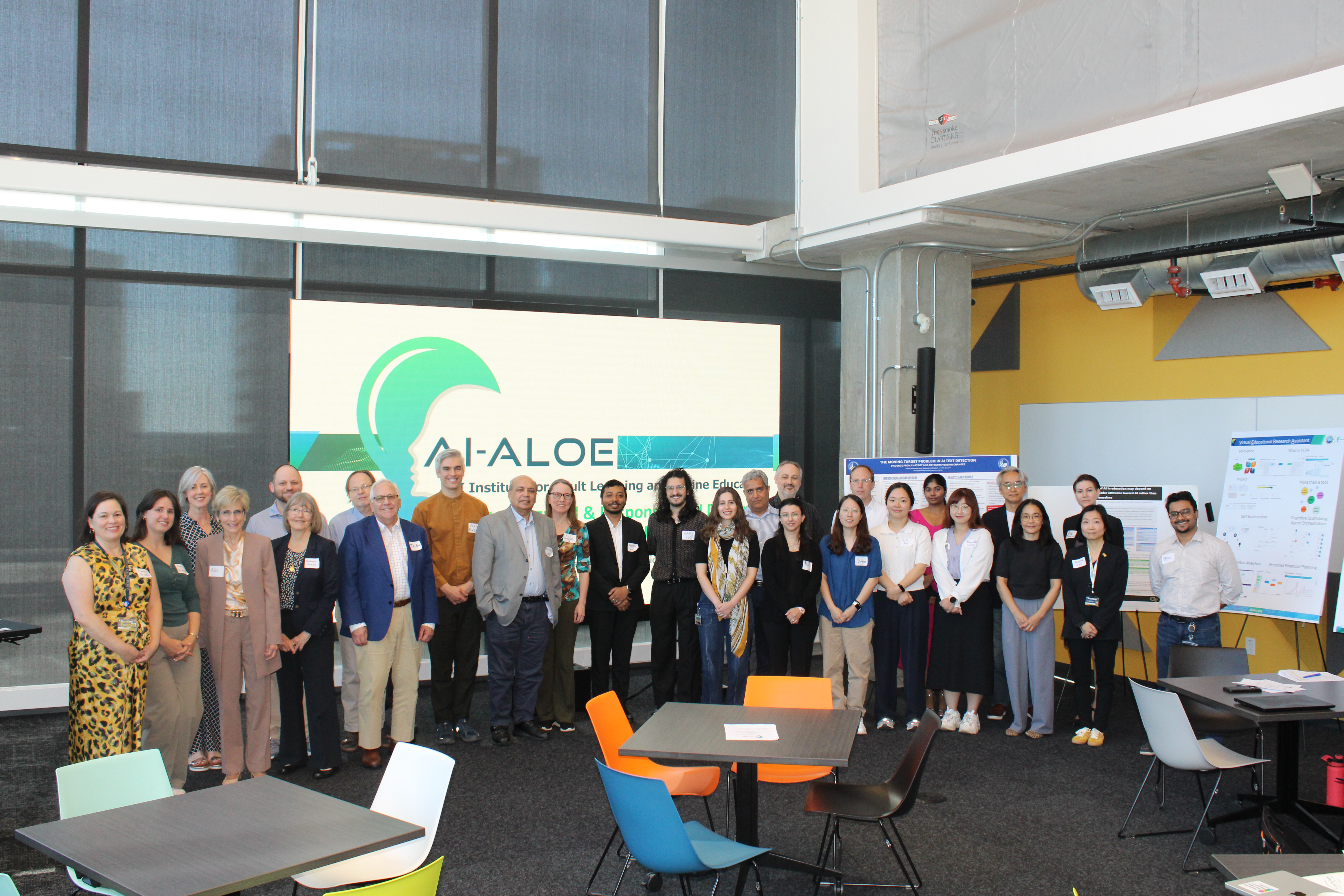
Our lab members presented their research during the AI ALOE EAB meeting. 🔗
May 15, 2026
AI-ALOE held its final EAB meeting on May 15, 2026, which aimed to update the Advisory Board on the institute's accomplishments and products, showcase findings from various ALOE teams, foster networking, highlight student research, and gather insights for the NSF Annual Report and Review Meeting. The meeting was attended by our director, Dr. Kim, alongside graduate associates Ahnaf, Hyunkyu, Jinho, Seora, and Yoojin, as well as recent graduate Dr. Haddadian. Dr. Kim served as chair for the "Theories of Learning" session, where Jinho and Yoojin delivered three-minute talks on theories of learning and personalization in learning, respectively. Additionally, Ahnaf, Hyunkyu, and Seora presented posters during the lunch break.
As session chair, Dr. Kim delivered the EAB presentation "Theories of Learning," which traced how the AI-ALOE project has built and refined a theoretical foundation for one central question: how can we enhance the proficiency of adult online education across both well-structured and ill-structured learning tasks?
Jinho's talk, "Theories of Learning: Whole-Person Perspective," argued that designing equitable AI learning tools requires looking beyond standard cognitive metrics to account for a student's complete identity and life circumstances.
Yoojin's presentation, "Personalization: Five Years of SMART," explored how personalized AI feedback from the SMART agent influences student engagement during writing-based concept learning.
Seora's poster, "Design Principles for AI-Supported Chatbots to Scaffold Problem-Based Learning in Undergraduate Nursing Education," proposed a framework for developing AI chatbots tailored for nursing students.
Hyunkyu's poster presentation, "How Do Students Differ in Writing and Revision?," framed summarization as a critical learning strategy in undergraduate STEM that is often hindered by a lack of timely feedback.
Ahnaf's poster, "The Digital Chameleon: Why AI Undetectability in Writing Is a Problem for Effective Learning," explored how the rise of generative AI challenges academic integrity and trust in higher education by testing the reliability of AI-text detection tools.
Lab members attended an ALOE virtual retreat 🔗
April 2, 2026
Dr. Kim was invited to deliver one of the five AI-ALOE theme presentations during the fifth-year ALOE retreat on April 2, 2026. The presentation offered a synthesis of the project's work on theories of learning, tracing how AI-ALOE has built and refined a theoretical foundation for AI-supported adult learning over the course of the initiative. Our graduate research associates, Jinho, Yoojin, and Seora, also attended the virtual meeting.
Dr. Kim presented a talk for the NSF AI ALOE Virtual Discussions 🔗
March 16, 2026
This presentation, entitled "Contributions to Theories of Learning: Discussions on Open-Ended Problems," examines contributions to theories of learning through the lens of the SMART platform, with a particular focus on open-ended problems. It is organized around four theoretical dimensions: adult learning, which emphasizes building mental models through diverse formative supports and self-directed, personalized learning environments; cognition and knowledge, which integrates the ICAP framework (Passive, Active, Constructive, Interactive) with the Community of Inquiry model to guide instructional design decisions; personality and temperament, which draws on Self-Determination Theory, Pekrun's Control-Value Theory, and the concept of cognitive engagement to explore how motivation drives effort, persistence, and achievement; and contextual/learner background, which investigates how demographic factors such as race and first-generation status interact with engagement and performance patterns over time. Across these dimensions, the presentation connects SMART's multimodal feedback, flexible navigation, and data visualization features to measurable learning behaviors—particularly writing, revision, and review activities—offering both a theoretical grounding and empirical evidence for understanding how AI-integrated instruction can support diverse learners.
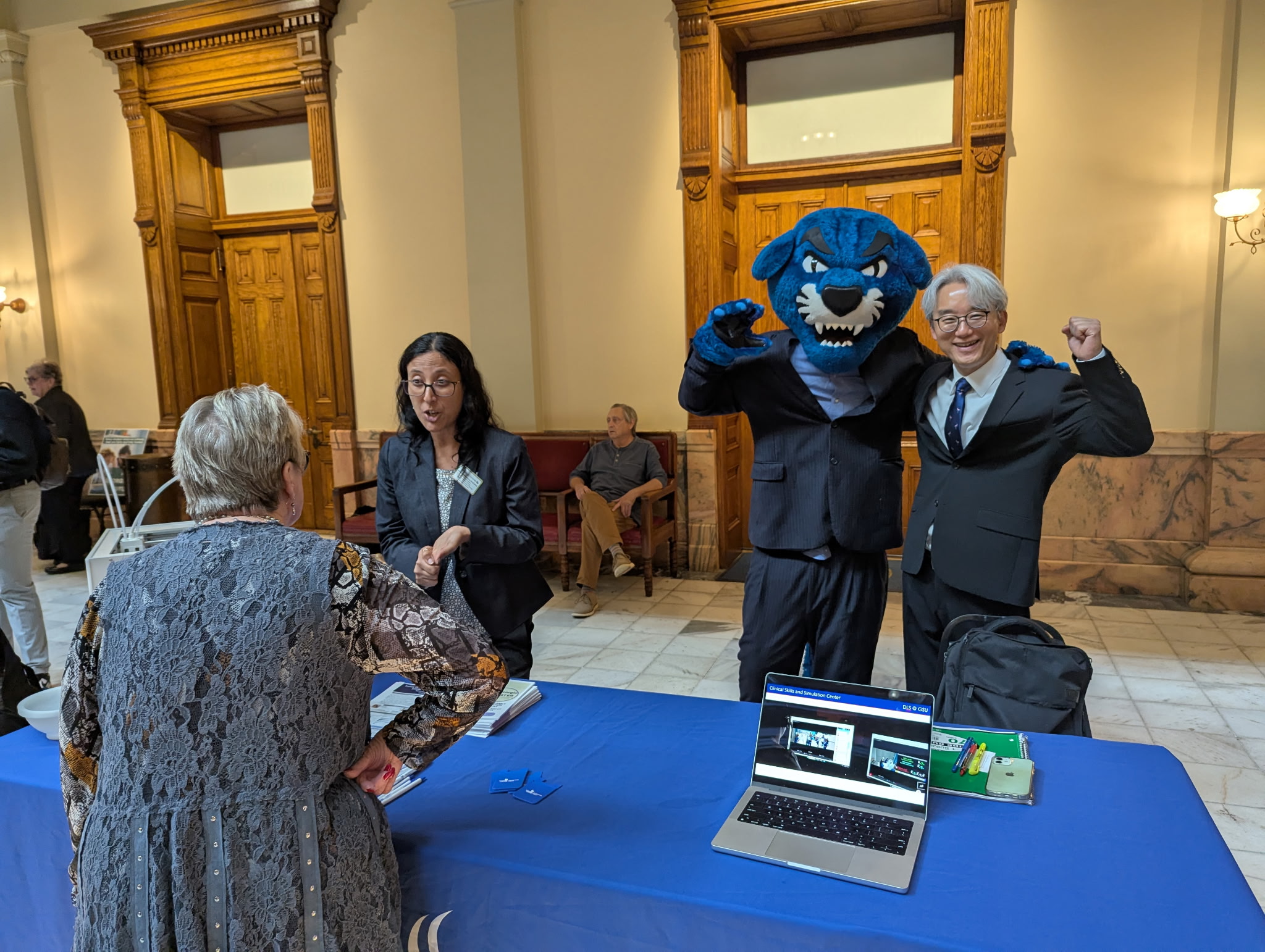
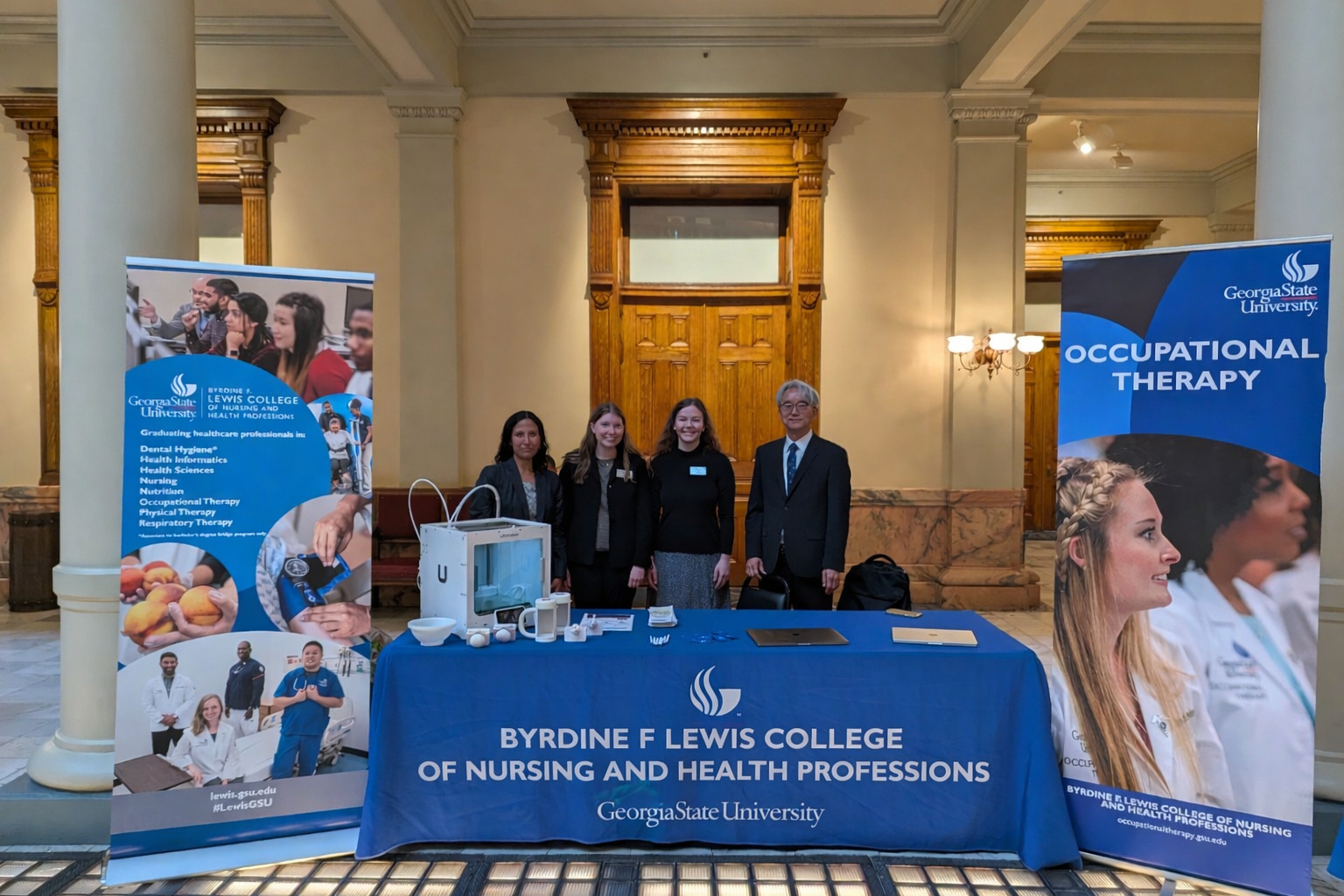
Dr. Kim presented at the Capitol. 🔗
February 19, 2026
Dr. Kim and researchers from the Byrdine F. Lewis College of Nursing and Health Professions showcased an AI simulation project as part of Georgia State University’s Research Day at the Capitol.
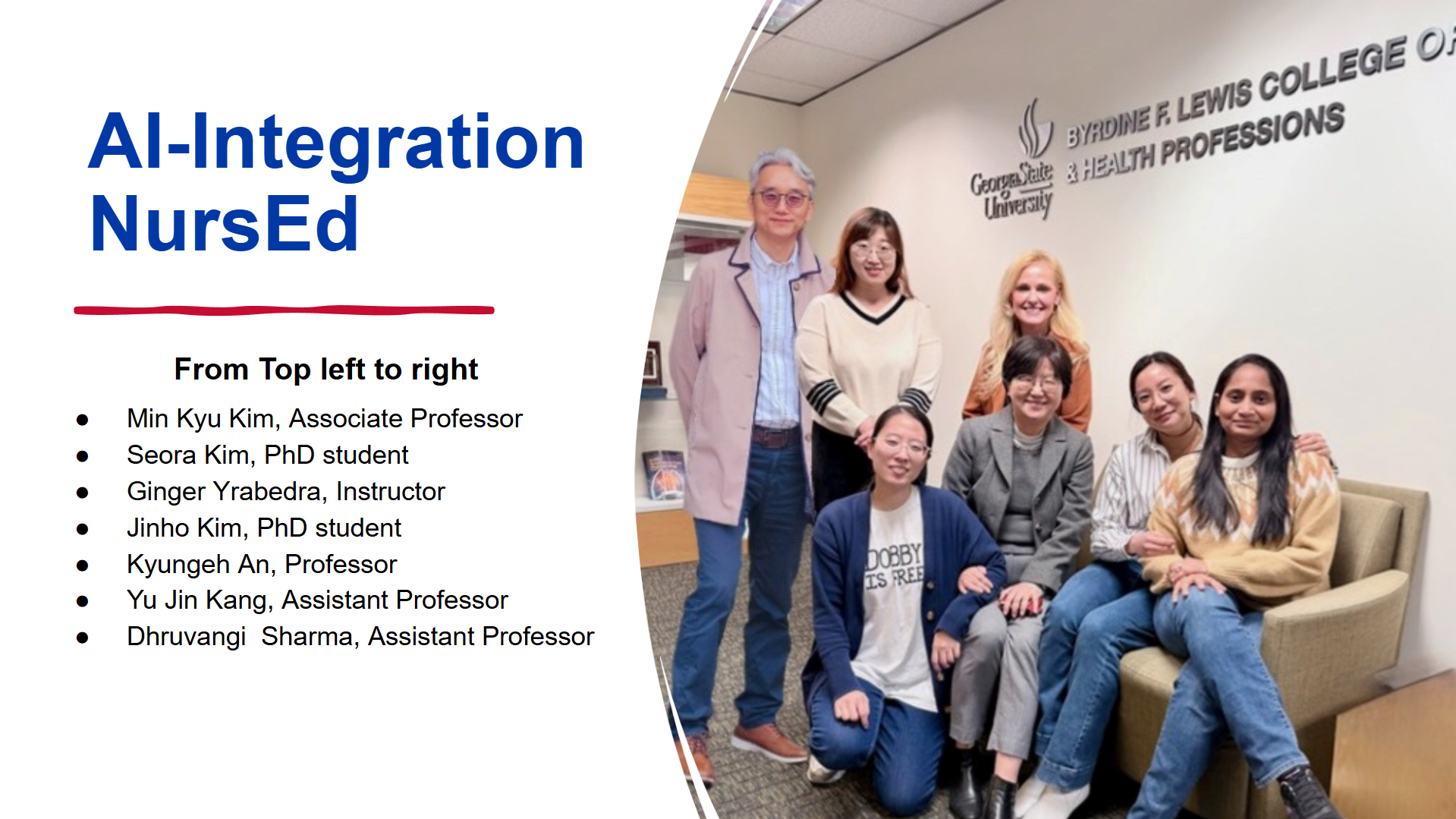
Our lab members provided a pre-conference workshop for SNRS. 🔗
February 18, 2026
Associate Professor Min Kyu Kim, doctoral students Jinho Kim and Seora Kim and faculty from the Byrdine F. Lewis College of Nursing and Health Professions presented at the Southern Nursing Research Society Annual Conference pre-conference workshop entitled “Optimization of AI Integration for Nursing Education and Research" at the Southern Nursing Research Society Annual Conference.
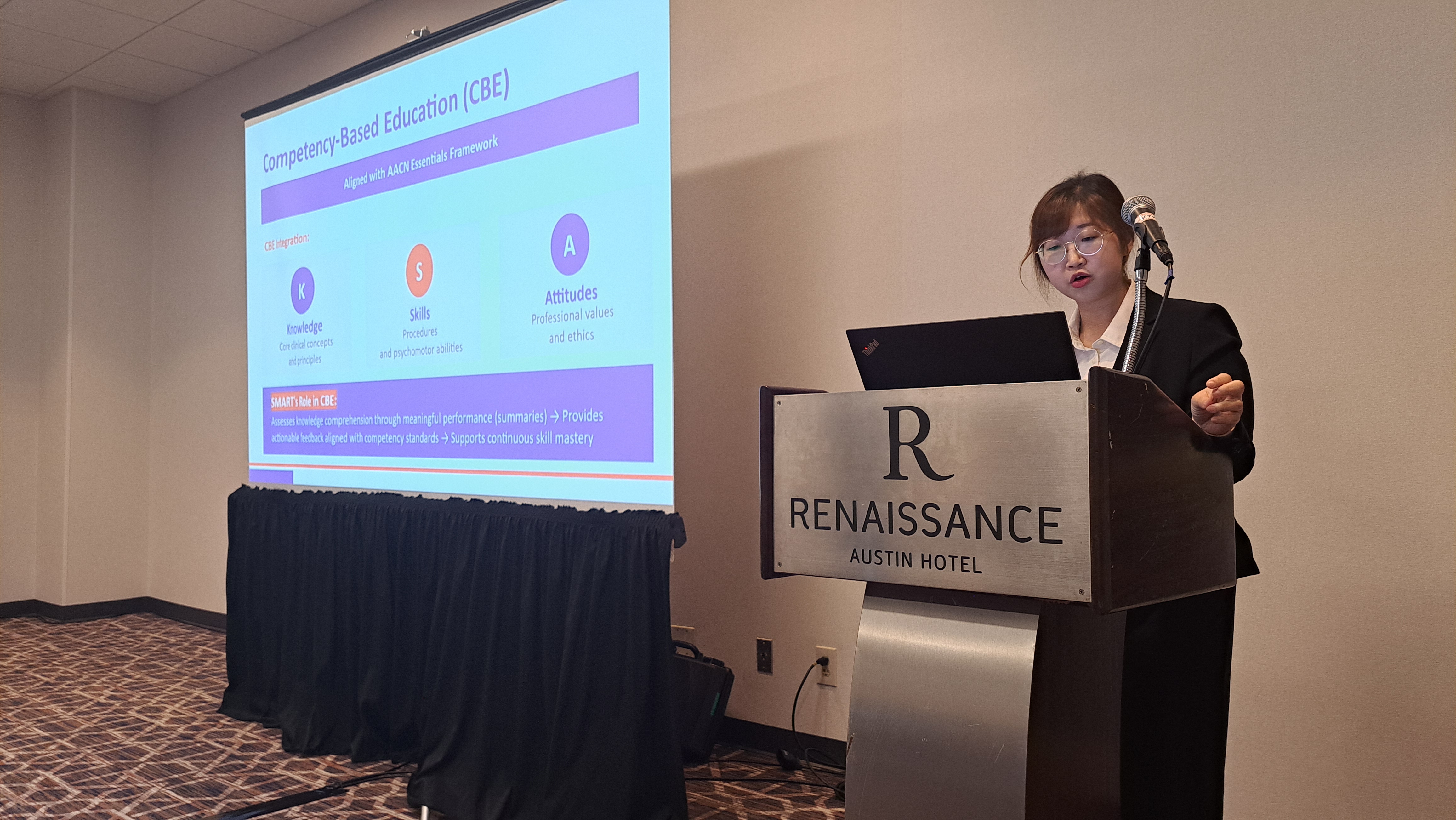
Dr. Kim presented a talk for the NSF AI ALOE Virtual Discussions 🔗
February 09, 2026
This presentation, titled "Instructional Design in Practice: Case Studies," details a multi-layered approach to studying and advancing AI-driven instructional design in practice. Building on the same overarching case-study framework introduced in the AI-ALOE project, it moves from task conceptualization and case narrative collection through a refined instructional design space analysis—mapping cases along dimensions such as learning mode, structure, participation, task scope, and design format—and then applies the PICRAT model to evaluate how AI technology integration affects both student engagement and teaching practice. The presentation goes further by showcasing concrete case examples (including engineering and instructional design courses), reviewing cross-case findings, and proposing a forward-looking vision called "AIM HIGH" (AI-Powered Multimodal Instruction for Growth), which envisions enhanced human–AI interaction through personalized feedback, multi-agent support, advanced hybrid learning environments, and generative AI–driven simulation-based training in fields such as nursing education.
Dr. Kim presented a talk for the NSF AI ALOE Virtual Discussions 🔗
February 02, 2026
This presentation, titled “Integration of Knowledge Based AI and Generative AI (Text to Model),” outlines how knowledge based AI approaches used in the earlier SMART versions have been integrated with generative AI to provide an enhanced personalized learning experience and more elaborated feedback for learners. In addition, Dr. Kim shared how this integration improved the precision and adaptivity of AI powered formative assessment and feedback, and how it has guided his current application development.
Dr. Kim presented a talk for the NSF AI ALOE Virtual Discussions 🔗
January, 26, 2026
This presentation, titled "Contributions to Instructional Design in Practice: Building Discussion Framework," outlines a structured framework for documenting and analyzing how AI-powered tools are being integrated into instructional design practice. Developed by Min Kyu Kim and Chris Dede, the framework proceeds through five stages: conceptualizing case studies that connect AI technology integration with established theories of learning, collecting case narratives using a standardized template, analyzing the instructional design space along dimensions such as formality and modality, evaluating technology integration depth through established frameworks like SAMR, PICRAT, TPACK, and CBAM, and organizing a presentation schedule for seven AI-ALOE tools (including SMART, Jill Watson, Apprentice Tutor, and others). Together, these components offer a systematic approach for understanding how AI tools reshape learning processes, instructional strategies, and the evolving role of human instructors in educational settings.
